Schoolhouse Garden

Merryman Lane is a diagonal alley in the Waverly neighborhood of Baltimore City that borders the former site of School 115, also known as the Waverly School. Roberta Sheridan was the first African American woman to be hired as a public teacher in predominantly black Baltimore City (and indeed, in all of Maryland), and she taught at this school beginning in 1888. For a long time, all that remained of this historic landmark was a parking lot and a trash-filled lot.

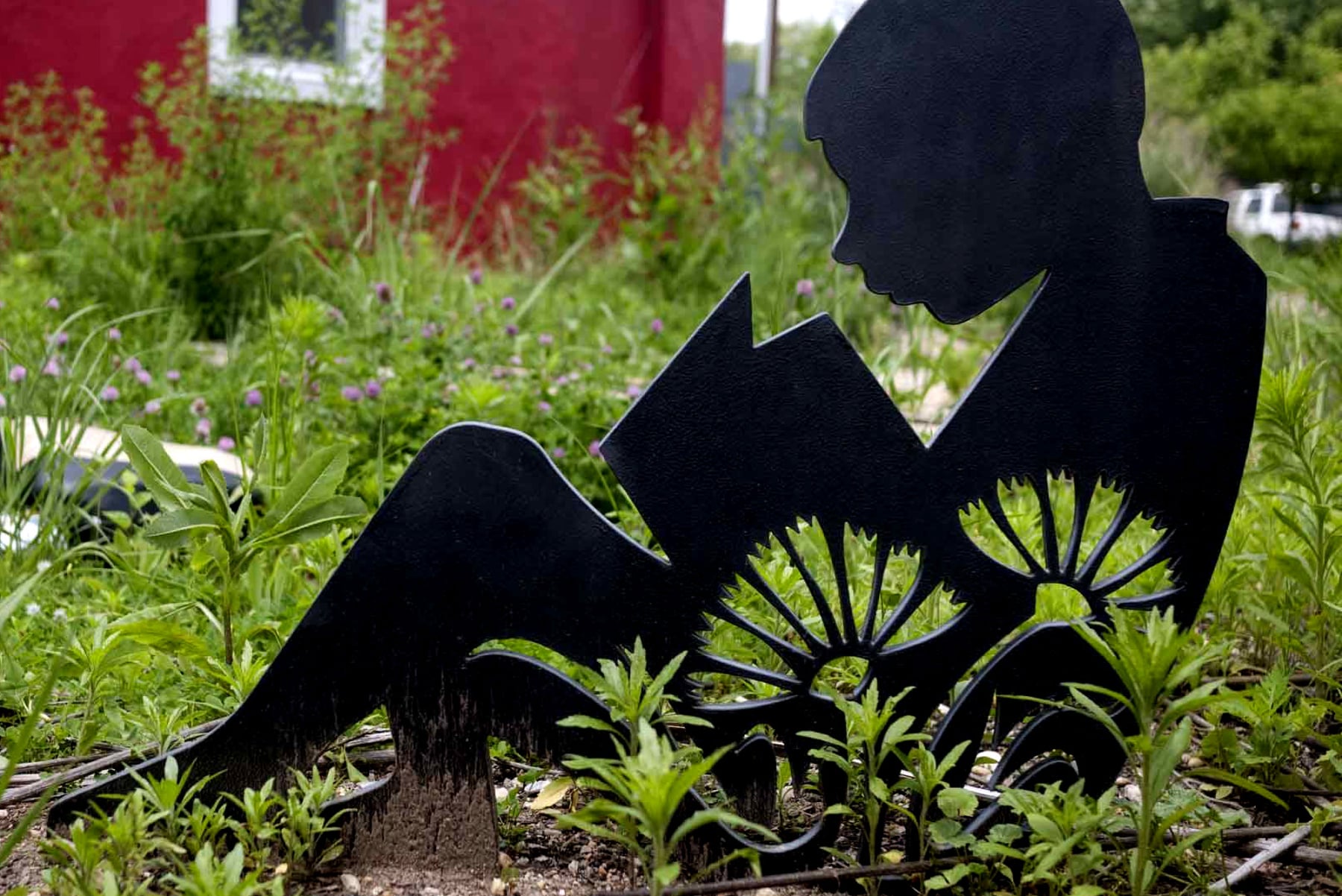
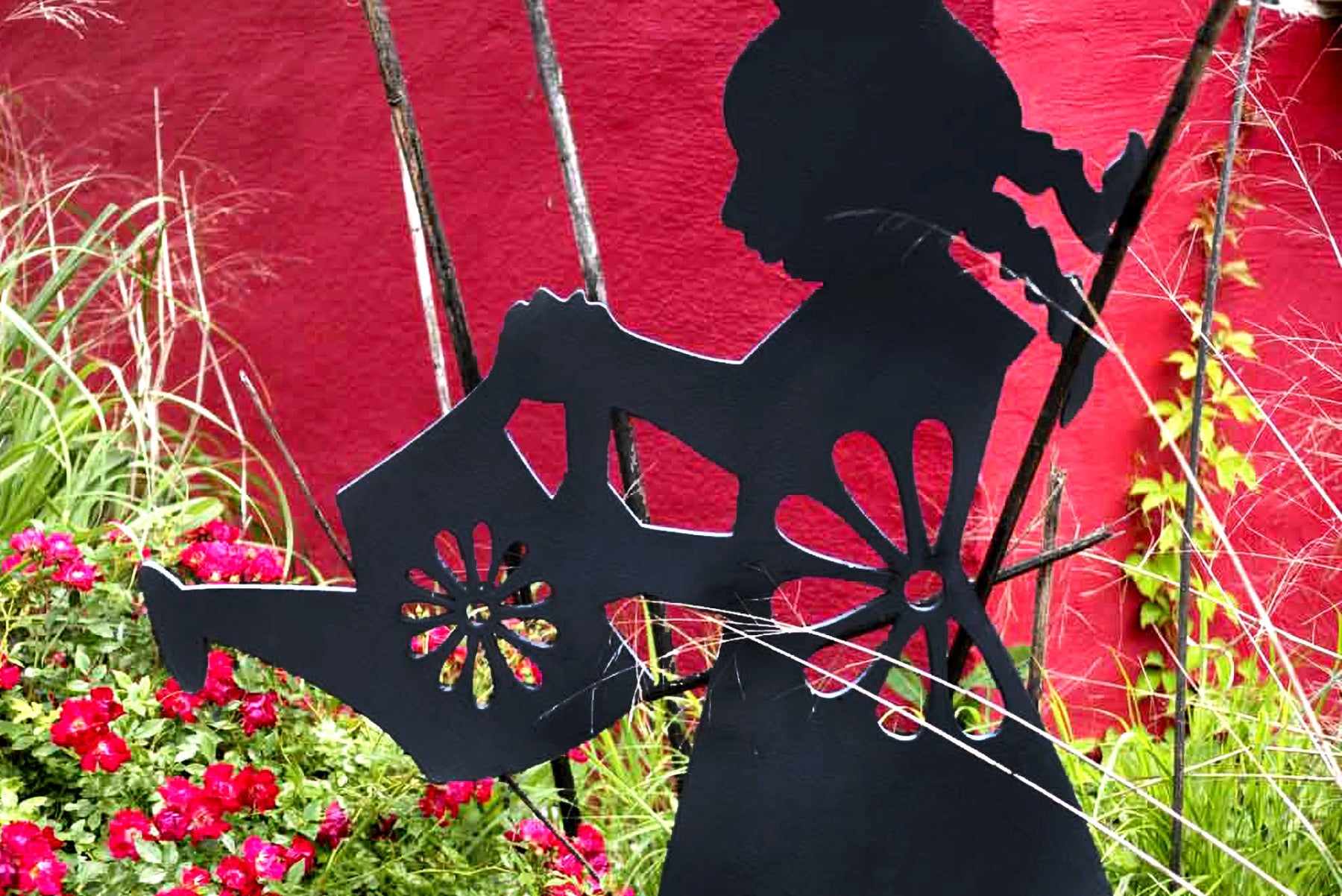
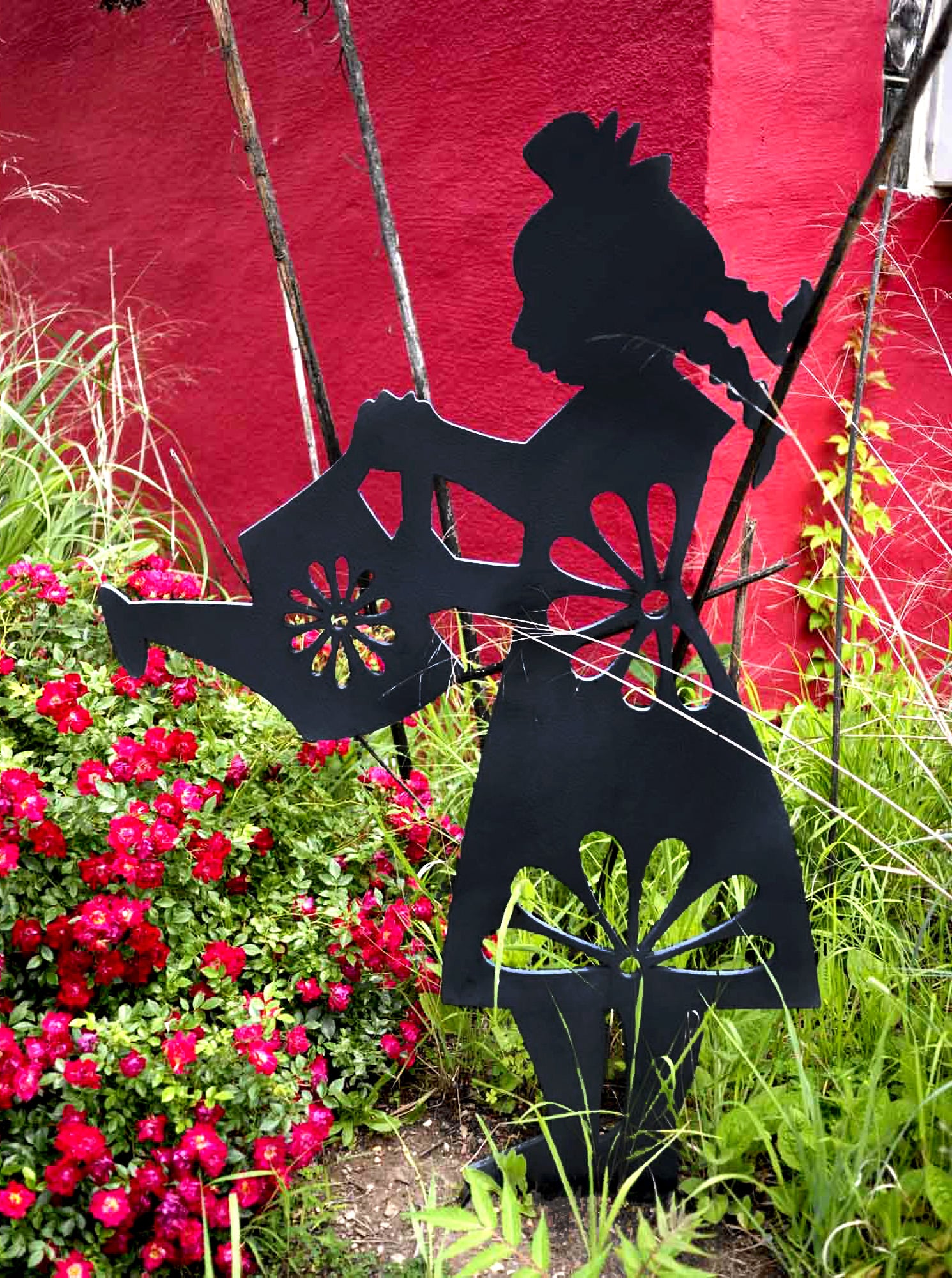
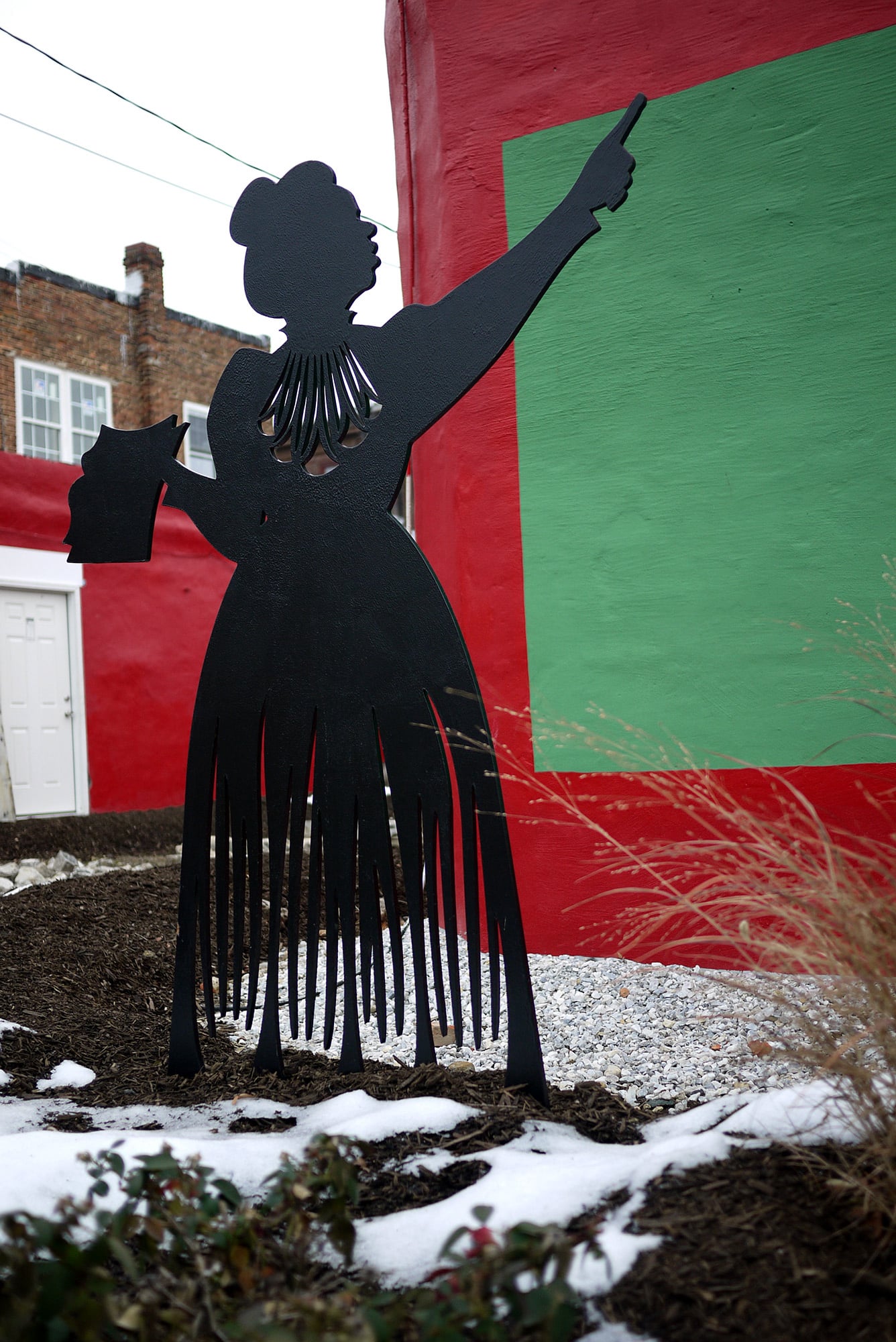
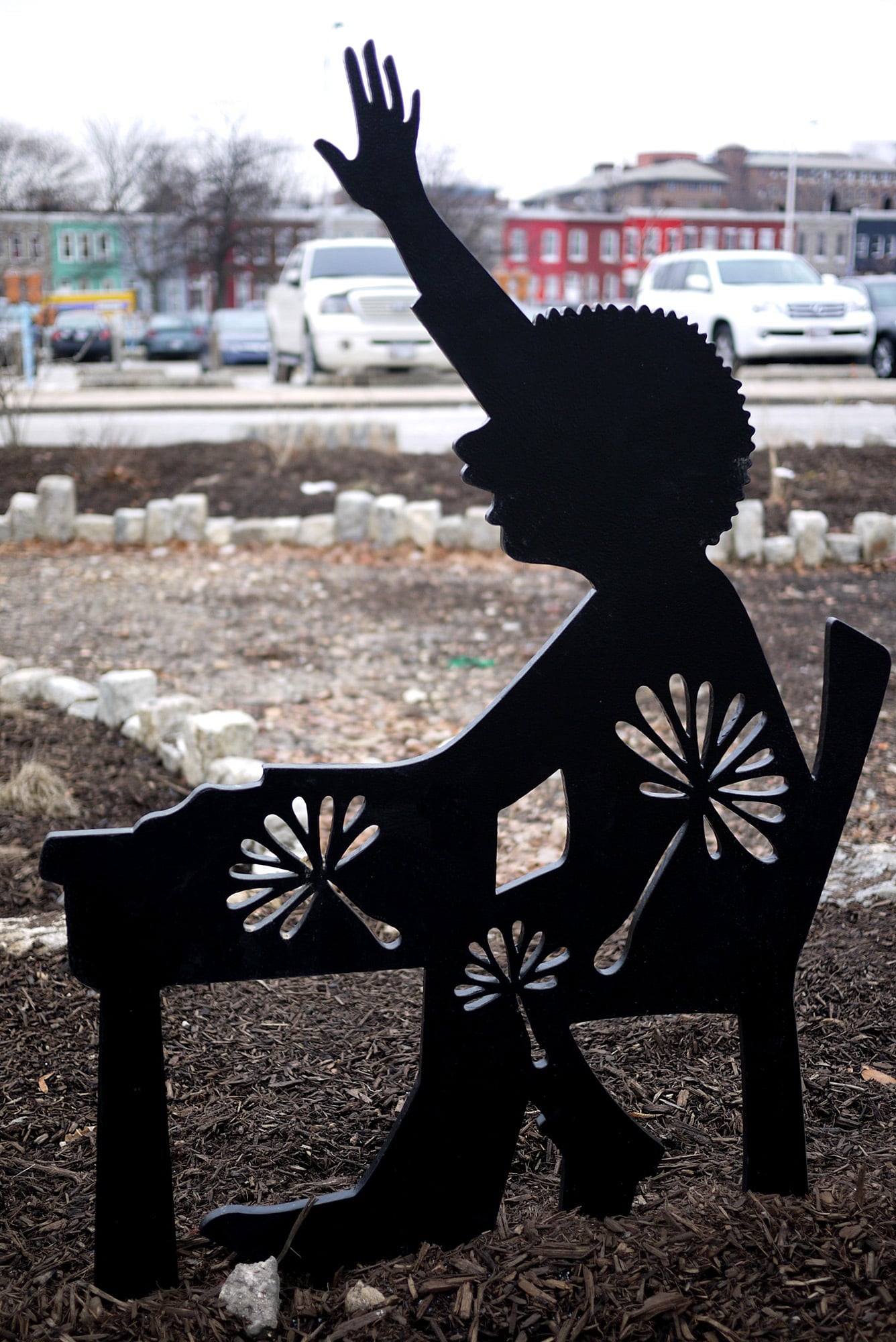
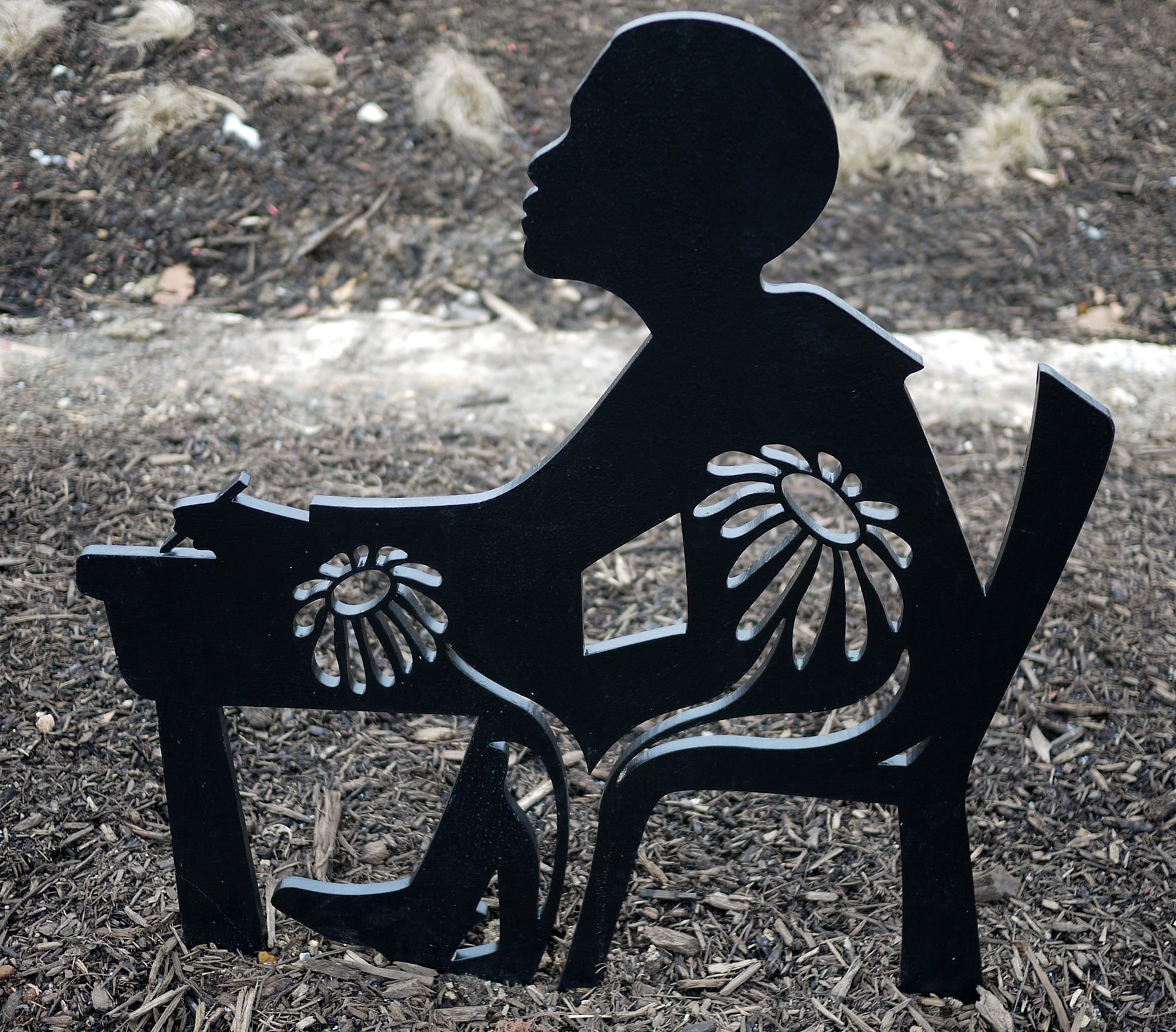
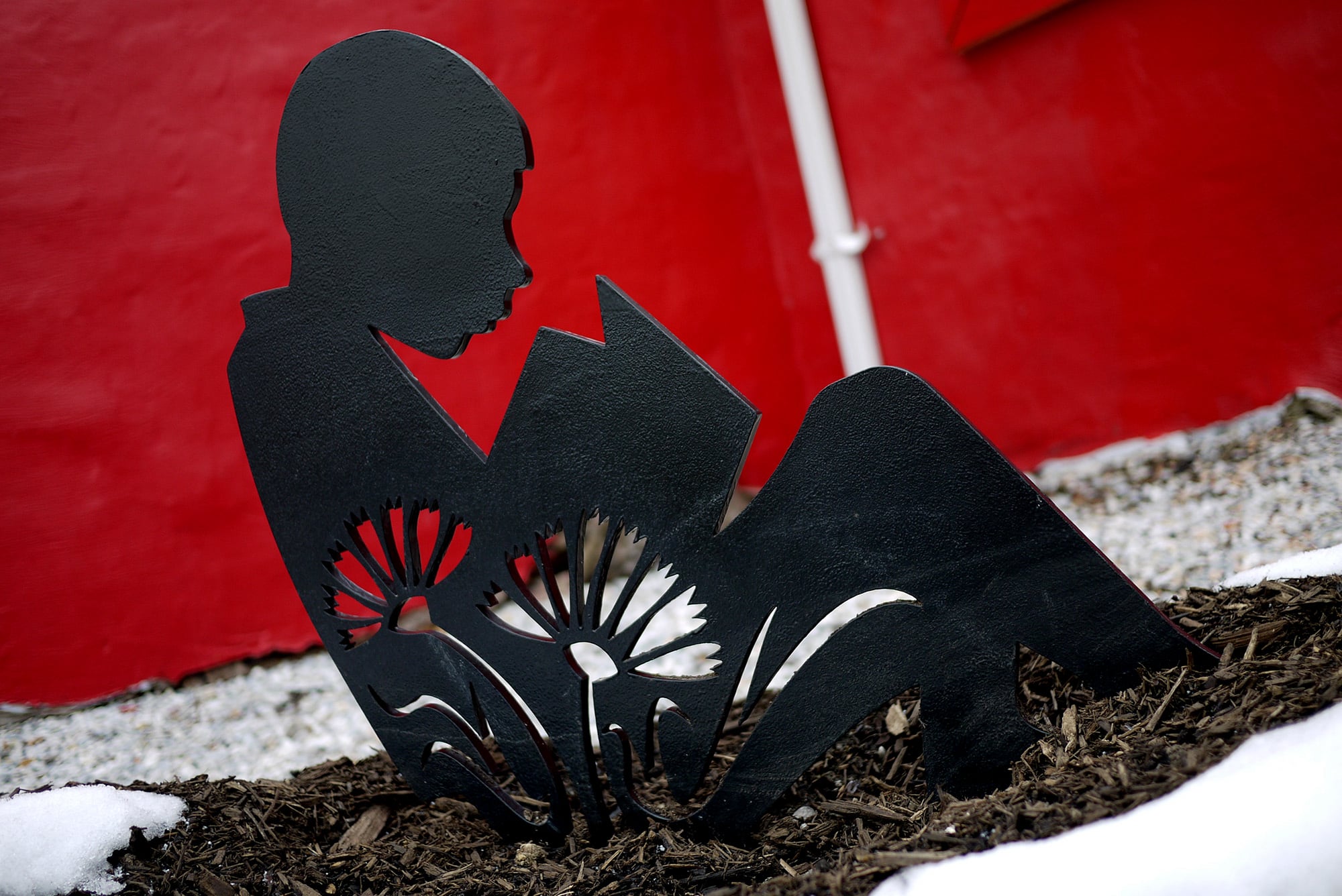
Following a long trajectory of painting murals as part of the designs of gardens installed by the Civic Works Community Lot Team, Emily C-D was invited in 2013 by Lot Team director Ed Miller to develop artwork to commemorate the historical significance of the site and compliment the plantings of the recently installed garden that had already done much to transform the space. Together with the Lot Team, Emily worked with Jessie Unterhalter and Katey Truhn (as the artist trio Can Collective), members of the Waverly Main Street Association, and several local historians in order to conceptualize artwork that honored the history while activating the present space. Based on their research, and influenced by the native flora of the garden, Can Collective designed and had fabricated steel silhouette sculptures of Ms. Sheridan and her students, which were installed among the plants and around the pathways. Schoolhouse Garden honors the historical struggle and achievements of African Americans in education in Baltimore, MD. Once a space of segregated learning, the triangle-shaped lot below Merryman Lane has become a reflective gathering place for everyone, where the plants and the art are the teachers.

Merryman Lane paper concept model, by Emily C-D with Jessie and Katey (artist trio Can Collective), Baltimore, MD, 2013.

Schoolhouse Garden paper concept model, by Emily C-D with Jessie and Katey (artist trio Can Collective), Baltimore, MD, 2013.

Merryman Lane es un callejón diagonal en el barrio Waverly de la ciudad de Baltimore, EEUU que queda a un costado del antiguo sitio de la Escuela 115, también conocida como la Escuela Waverly. La Maestra Roberta Sheridan hizo historia trabajando en esta escuela a partir del 1888, siendo entonces la primera mujer negra contratada como maestra pública en Baltimore, una ciudad mayormente de decendencia afroamericana. Durante mucho tiempo, lo único que quedó de este monumento histórico fue un estacionamiento y un terreno baldío, lleno de basura.

Tras pintar varios murales como parte del diseño de jardines hechos por el Equipo de Lotes Comunitarios de Civic Works, Emily C-D fue invitada en 2013 por Ed Miller, el director del Equipo de Lotes, a desarrollar una instalación de arte que conmemorara la importancia histórica del sitio a la vez que complementara el jardín recientemente instalado allí. Emily colaboró ​​con Jessie Unterhalter y Katey Truhn (el trío artístico Can Collective), la Asociación de Waverly Main Street, y varixs historiadores locales para conceptualizar arte público que honrara la historia del lugar y activara el espacio actual. Basándose en esa investigación, e inspiradas por la flora nativa del jardín, Can Collective diseñó y mandó a fabricar esculturas de acero en forma de siluetas de la Maestra Sheridan y sus alumnxs, las cuales se instalaron entre las plantas y alrededor de los senderos. El Jardín de la Escuela Waverly rinde homenaje a la lucha histórica y los logros de lxs afroamericanxs en la educación en Baltimore. Antiguamente un espacio de aprendizaje segregado, el terreno triangular bajo Merryman Lane se ha convertido en un lugar de encuentro y reflexión para todxs, donde las plantas y el arte son lxs maestrxs. 

All Work © 2025 Emily C-D